Customer Support

English

How to Build a High-Converting WhatsApp Lead Generation Funnel in Just 5Min

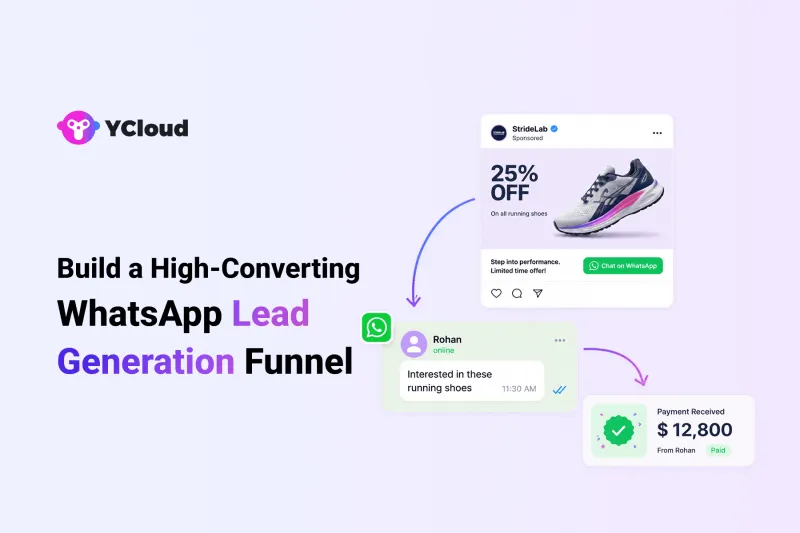
Getting leads on WhatsApp is easy.
Converting them into customers is the hard part…!
A prospect clicks your ad.
Another scans a QR code.
Someone asks for pricing from your website.
And a high-intent lead starts a WhatsApp chat.
Another scans a QR code.
Someone asks for pricing from your website.
And a high-intent lead starts a WhatsApp chat.
But if replies are delayed, qualification happens manually, or follow-ups are missed, those leads can go cold very quickly.
The problem is not always lead volume.
It is the missing system between the first WhatsApp message and the final conversion.
It gives every lead a structured path, from capture and qualification to nurturing, sales handoff, follow-up, and conversion, without making every conversation dependent on a human agent.
In this guide, we’ll show you how to build a high-converting WhatsApp lead generation funnel in just 5 minutes using YCloud. We’ll also discuss the lead entry points, AI-powered qualification, automated workflows, CTWA ads, follow-ups, ROI tracking, and much more.
Next, let’s first understand what WhatsApp Lead Generation actually means.
TL;DR
- A WhatsApp Lead Generation Funnel turns new chats into qualified leads and customers through a structured journey.
- Leads can enter through Click-to-WhatsApp ads, website widgets, QR codes, social links, and landing pages.
- The funnel follows four key stages: awareness, engagement, qualification, and conversion.
- AI Agents can respond instantly, collect lead details, understand intent, qualify prospects, and route high-intent leads to sales.
- Automated Journeys and Campaigns help nurture leads with relevant follow-ups instead of repetitive messages.
- YCloud connects CTWA ads, AI Agents, lead segmentation, team Inbox, automation, and conversion tracking in one platform.
- Funnel performance should be measured using lead cost, qualification rate, conversion rate, customer acquisition cost, and attributed revenue.
- The complete funnel can be built without coding and helps move leads from the first click to the final conversion.
What is WhatsApp Lead Generation?
WhatsApp lead generation is the process of turning people who start a conversation with your business into qualified sales opportunities and eventually customers, all inside WhatsApp.
A lead may enter through a Click-to-WhatsApp ad, website button, QR code, social campaign, or product page.
From there, a structured WhatsApp Lead Generation Funnel can:
- Capture the lead’s details
- Ask relevant qualifying questions
- Identify intent and requirements
- Segment the lead automatically
- Send personalised follow-ups
- Route high-intent prospects to the sales team
Unlike a traditional funnel that moves users across forms, landing pages, emails, and multiple tools, WhatsApp keeps the journey fast, direct, and conversational.
But WhatsApp lead generation is not simply about collecting more chats.
It is about creating a clear system that moves every new conversation towards the right next step.
With YCloud, businesses can build this funnel using no-code automation, AI-powered qualification, automated follow-ups, and sales handoffs, all within WhatsApp.
Next, let’s understand why WhatsApp has become such a powerful channel for generating and converting leads.
Also Explore 20 Proven WhatsApp Lead Generation Strategies to Generate 1000s of Leads Per Month
Why WhatsApp is the Most Powerful Channel for Lead Generation
Most lead-generation channels create friction.
A prospect clicks an ad, lands on a page, fills out a form, waits for a reply, and may lose interest before the sales conversation even begins.
WhatsApp shortens that journey.
A lead can click, start a conversation, ask a question, and receive an immediate response, all inside an app they already use.
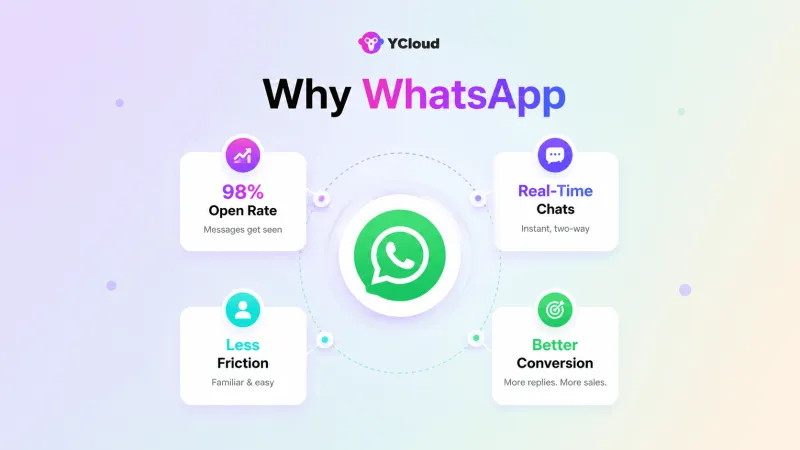
That makes WhatsApp Lead Generation powerful for several reasons:
Faster conversations
Leads do not have to wait for an email or callback. Businesses can answer questions, understand requirements, and move the conversation forward in real time.
Less friction
Click-to-WhatsApp ads, website widgets, QR codes, and social links can take prospects directly into a chat instead of sending them through long forms and landing pages.
More personalised engagement
Businesses can share relevant product details, brochures, videos, pricing, recommendations, and offers based on what each customer actually needs.
Automated qualification
AI agents and chatbots can ask questions, capture lead data, identify intent, segment prospects, and route high-value opportunities to the sales team, even outside business hours.
Easier follow-up
Leads can be tagged, grouped, nurtured, and retargeted based on their actions and stage in the funnel, reducing the chances of valuable conversations being forgotten.
The real advantage is not simply that WhatsApp messages get noticed.
It is that WhatsApp brings lead capture, qualification, nurturing, and conversion into one continuous conversation.
Next, let’s look at the core components required to build an AI-powered WhatsApp lead generation funnel.
What Powers an AI-Driven WhatsApp Lead Funnel
A high-converting WhatsApp lead funnel is not just a chatbot responding to messages.
It connects the complete journey, from the first click to qualification, follow-up, and sales handoff.
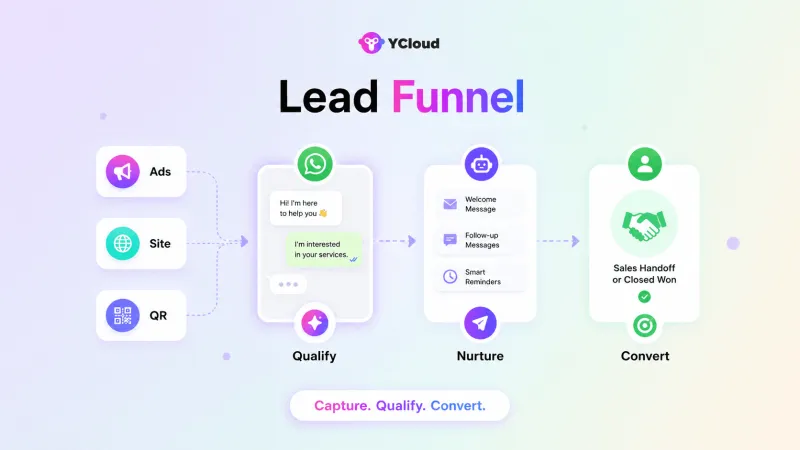
1. Lead entry points
The funnel starts wherever a prospect discovers your business.
This may include:
- Click-to-WhatsApp ads
- Website chat widgets
- QR codes
- Social media links
- Landing-page buttons
The goal is simple: Move interested users directly into a WhatsApp conversation with minimal friction.
2. Instant lead capture
The moment a prospect sends the first message, the system should respond immediately.
An AI agent can greet the lead, understand why they reached out, collect key details, and guide them to the next step without making them wait for a sales representative.
3. AI-powered qualification
Not every lead has the same intent.
The AI can ask relevant questions about the lead’s requirements, budget, company size, timeline, or use case. Based on the answers, it can segment and score the lead automatically.
High-intent prospects can be routed to sales, while others continue through the funnel.
4. Automated nurturing and follow-up
Some leads are interested but not ready to buy immediately.
Instead of letting them go cold, the funnel can send useful resources, product information, case studies, reminders, or personalised follow-ups based on their previous conversation.
Together, these components help businesses capture leads faster, qualify them more accurately, and maintain momentum until they are ready to convert.
Next, let’s look at the complete WhatsApp Lead Generation Funnel stage by stage.
The WhatsApp Lead Generation Funnel in Four Stages
A WhatsApp Lead Generation Funnel usually moves prospects through four simple stages:
1. Awareness
Attract potential customers through Click-to-WhatsApp ads, social media, website buttons, QR codes, or offline campaigns.
2. Engagement
Start the conversation by offering something useful, such as a product guide, consultation, demo, discount, or personalised recommendation.
3. Qualification
Use an AI agent or automated flow to ask relevant questions, understand intent, and separate high-potential leads from casual enquiries.
4. Conversion
Share a personalised offer, connect the lead with the right sales representative, and guide them towards booking, purchasing, or completing the desired action.
Each stage should move the lead naturally towards the next step without making the conversation feel forced or overly automated.
Next, let’s build the complete WhatsApp Lead Generation Funnel step by step.
How to Build a Solid WhatsApp Lead Generation Funnel That Converts
Building a WhatsApp Lead Generation Funnel does not need to be complicated.
You only need a clear entry point, the right questions, automated follow-ups, and a simple path from interest to conversion.
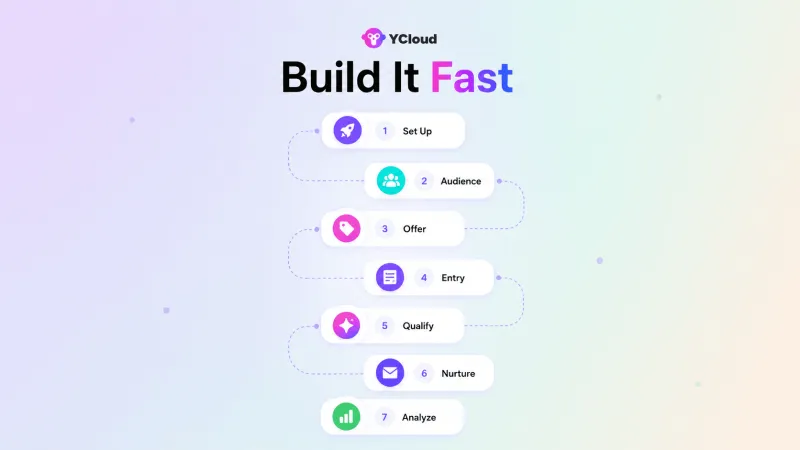
Step 1: Set up your WhatsApp Business account
Start with the (such as YCloud) so you can automate conversations, use approved templates, connect third-party apps, and manage leads at scale.
Complete your business profile with accurate information, including your website, description, support details, and business category.
Step 2: Define your target audience
Be clear about who you want to attract before building the funnel.
Understand:
- What problem they are trying to solve
- What motivates them to take action
- What information they need before buying
- Which questions help identify serious prospects
Your funnel should speak directly to their needs instead of treating every lead the same.
Step 3: Create a strong reason to start the chat
Give prospects something valuable in exchange for starting a WhatsApp conversation.
This could be:
- A free guide or checklist
- A product recommendation
- A consultation or demo
- A discount code
- A webinar invitation
- A pricing estimate
The offer should be relevant enough to make the user take the first step.
Step 4: Create WhatsApp entry points to capture leads
Make it easy for prospects to enter the funnel from wherever they discover your business.
You can use:
- Click-to-WhatsApp ads
- Website chat widgets
- WhatsApp links
- QR codes
- Social media buttons
- Product and landing pages
Each entry point should open the conversation with a clear message or prompt.
Step 5: Automate lead qualification
Once the lead enters WhatsApp, use an AI agent or chatbot flow to ask a few relevant questions.
For example:
- What product or service are you interested in?
- What is your budget?
- When are you planning to get started?
- What is your company size or use case?
Based on the answers, leads can be tagged, scored, segmented, or routed automatically.
Step 6: Nurture and convert leads
High-intent leads should be assigned to the right sales representative without delay.
Leads who are interested but not ready to buy can receive personalised follow-ups, case studies, product information, reminders, or offers based on their previous responses.
The goal is to keep the conversation useful, not turn it into a repetitive sales pitch.
Step 7: Analyze and improve the funnel
Track how users move through each stage.
Monitor:
- Entry-point clicks
- Response rates
- Qualification completion
- Drop-off points
- Sales handoffs
- Follow-up engagement
- Lead-to-customer conversions
Test different welcome messages, qualifying questions, offers, and follow-up timings to identify what produces better results.
That is the complete process: attract, capture, qualify, nurture, route, and convert, all within WhatsApp.
Next, let’s explore the advanced YCloud features that can help automate and improve each stage of your WhatsApp Lead Generation Funnel.
YCloud’s Advanced Features for WhatsApp Lead Generation
A lead generation funnel works better when acquisition, qualification, nurturing, and sales handoff are connected.
YCloud brings these stages together in one WhatsApp platform.
1. Capture leads through CTWA ads
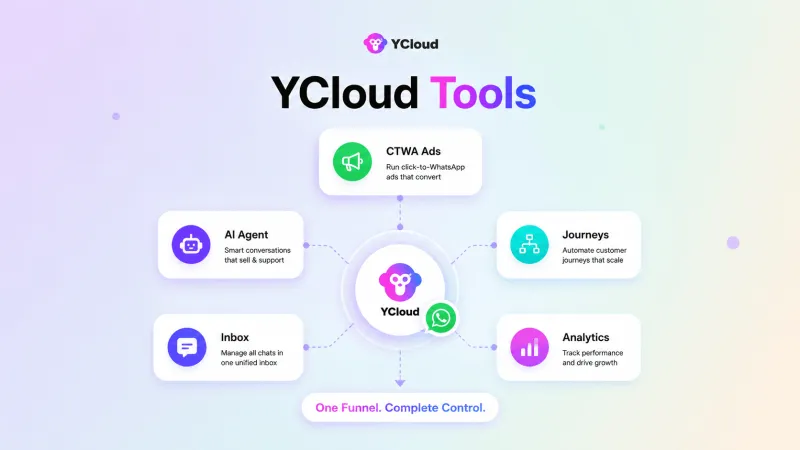
Connect Click-to-WhatsApp campaigns across Facebook, Instagram, TikTok, and Google. When someone clicks the ad, they enter a WhatsApp conversation where their details and campaign source can be captured immediately.
2. Qualify leads with an AI Agent
YCloud’s no-code AI Agent can learn from your website, product materials, and business instructions. It can answer questions, collect contact details, understand intent, qualify prospects, and route serious buyers to the right sales representative.
3. Automate nurturing with Journeys and Campaigns
Use Journey automation to trigger follow-ups based on customer behaviour. Campaigns can then re-engage leads with relevant offers, reminders, product information, or personalised broadcasts instead of sending the same message to everyone.
4. Organise leads and manage sales handoffs
Contacts can be grouped using labels and filters, helping teams identify high-value prospects. When human involvement is required, the shared Inbox allows sales representatives to continue the same WhatsApp conversation without making the lead start again.
5. Add more lead entry points
YCloud Growth Tools let you create WhatsApp links, QR codes, and website buttons, making it easier to capture leads from websites, social media, packaging, events, and offline campaigns.
6. Track which ads generate real results
YCloud provides ad-level attribution, Conversion API integrations, and a real-time analytics dashboard. This helps businesses connect ad clicks with WhatsApp conversations and conversions, compare channel performance, and optimise campaign budgets using actual lead data.
Together, these features help businesses manage the complete WhatsApp Lead Generation Funnel, from the first click to qualification, nurturing, sales handoff, and conversion.
Next, let’s see how to run Click-to-WhatsApp ads with YCloud.
How to Run Click-to-WhatsApp Ads with YCloud
Running CTWA ads with YCloud takes four simple steps:
1. Connect your WhatsApp Business Account
Create or connect your WhatsApp Business Account through YCloud and link it to the ad platform you plan to use.
2. Create your Click-to-WhatsApp ad
Choose your target audience, add compelling visuals and copy, and use a clear CTA that encourages users to start a WhatsApp conversation.
3. Automate incoming conversations
Use YCloud’s AI Agent, Inbox, and automated workflows to respond instantly, capture lead details, qualify prospects, and route high-intent leads to your sales team.
4. Track and optimise performance
Monitor conversations, conversions, and ad-level attribution from the YCloud dashboard. Use this data to refine your targeting, creatives, follow-ups, and advertising budget.
Click HERE to learn more about running Click-to-WhatsApp Ads with YCloudNext, let’s explore the best practices for optimising your WhatsApp Lead Generation Funnel.
Best Practices to Optimize Your WhatsApp Lead Generation Funnel
A WhatsApp funnel works only when every interaction moves the lead closer to the next step.
Here are a few ways to improve its performance:
1. Personalize every conversation
Use the lead’s name, interests, source, previous responses, and funnel stage to make messages more relevant.
Avoid sending the same generic follow-up to everyone.
2. Respond immediately
A high-intent lead can lose interest quickly.
Use AI Agents and automated flows to acknowledge new enquiries, answer common questions, and begin qualification without making users wait for a sales representative.
3. Keep qualification short
Ask only the questions required to understand intent and identify the right next step.
Long or complicated chat flows can cause leads to leave before completing the process.
4. Follow up based on behaviour
A lead who requested pricing should receive a different follow-up from someone who only downloaded a guide.
Use tags, segments, and Journey automation to trigger messages based on actions—not assumptions.
5. Make the next step clear
Every message should guide the lead towards one specific action, such as:
- Book a demo
- View pricing
- Choose a product
- Speak with sales
- Complete a purchase
Too many choices can slow down decision-making.
6. Track funnel performance
Monitor where leads enter, respond, drop off, qualify, and convert.
Use this data to improve your ads, welcome messages, qualification questions, follow-up timing, and sales handoff process.
7. Obtain consent and respect opt-outs
Send marketing follow-ups only to users who have provided valid opt-in consent. Give them an easy way to stop receiving promotional messages and maintain accurate contact records.
A strong WhatsApp Lead Generation Funnel should feel like a helpful conversation, not a rigid automation sequence.
Next, let’s look at the common mistakes that can reduce lead quality and hurt conversions.
Common Yet Biggest Mistakes to Avoid
Even a well-built WhatsApp Lead Generation Funnel can underperform if the execution is poor.
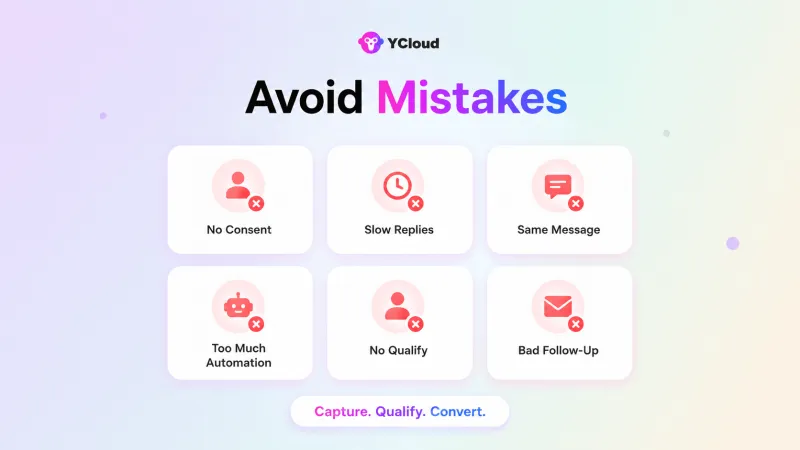
Here are the most common mistakes businesses should avoid:
1. Messaging users without consent
Sending unsolicited messages can lead to blocks, complaints, and policy violations.
2. Responding too slowly
High-intent leads lose interest quickly. A delayed reply can send them straight to a competitor.
Fix: Use automated greetings and AI Agents to respond instantly, then route serious leads to the sales team.
3. Treating every lead the same
Generic messages ignore differences in intent, budget, interests, and funnel stage.
Fix: Segment leads and personalise conversations based on their responses and behaviour.
4. Over-automating conversations
Long, rigid chatbot flows can frustrate prospects, especially when they need human help.
Fix: Use automation for capture, qualification, and routine queries, but allow easy handoff to a sales representative.
5. Skipping lead qualification
Without qualification, sales teams may spend too much time on low-intent enquiries while serious buyers wait.
Fix: Ask a few focused questions to identify the lead’s need, urgency, budget, and buying intent.
6. Following up too much or not at all
No follow-up allows interested leads to go cold. Too many messages can feel intrusive and increase opt-outs.
Fix: Create timely, behaviour-based follow-ups instead of sending repeated generic reminders.
7. Ignoring funnel performance
Without tracking replies, drop-offs, qualified leads, and conversions, it is difficult to know what needs improvement.
Fix: Review performance regularly and optimise your entry points, messages, qualification flow, and sales handoff.
Most WhatsApp funnels do not fail because of the platform. They fail because leads receive slow, irrelevant, or poorly timed experiences.
Next, let’s look at a practical framework for measuring the ROI of your WhatsApp Lead Generation Funnel.
How to Measure WhatsApp Lead Generation ROI
Generating leads is not enough. You also need to know whether those WhatsApp conversations are producing revenue.
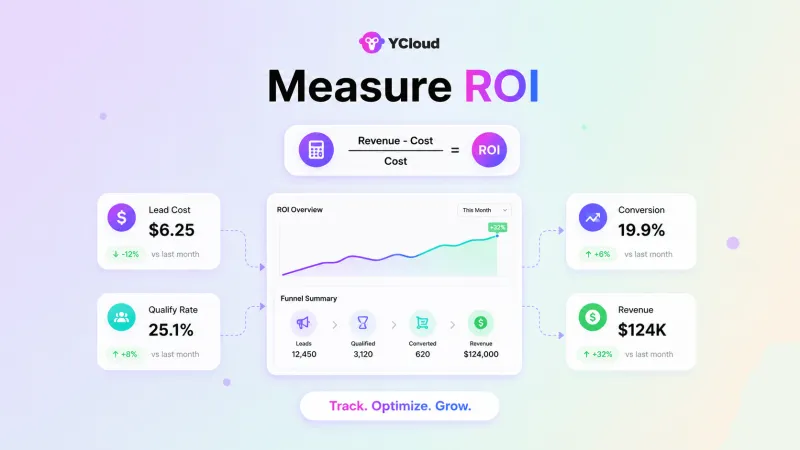
Use this simple formula:
ROI = (Attributed Revenue − Total Cost) ÷ Total Cost × 100
Your total cost may include:
- Advertising spend
- YCloud subscription
- Meta message charges
- AI automation or agent costs
Note: Meta now charges per template message, not per 24-hour conversation window. The rate varies by message category and the recipient’s country.
Practical Example
- Website visitors: 10,000
- WhatsApp leads: 1,000
- Qualified leads: 600
- Customers acquired: 120
- Average deal value: $150
- Total revenue: $18,000
- Total campaign cost: $1,080
ROI = ($18,000 − $1,080) ÷ $1,080 = 15.7x
To understand the complete funnel, track:
- Cost per WhatsApp lead
- Lead qualification rate
- Lead-to-customer conversion rate
- Customer acquisition cost
- Revenue attributed to WhatsApp
These metrics show where leads are converting, where they are dropping off, and whether your WhatsApp Lead Generation Funnel is profitable.
Next, let’s wrap up why businesses need a structured WhatsApp funnel now.
Wrapping Up! Why a WhatsApp Lead Funnel Matters Now…
WhatsApp can generate conversations.
But without a clear funnel, those conversations can quickly turn into missed follow-ups, unqualified enquiries, and lost sales opportunities.
A structured WhatsApp Lead Generation Funnel helps businesses capture leads, qualify intent, nurture prospects, and route serious buyers to the right sales team, all within one continuous conversation.
With YCloud, you can build and automate this journey using CTWA ads, AI Agents, Journeys, Campaigns, and a shared team Inbox without writing code.
The goal is not simply to get more WhatsApp chats.
It is to turn every relevant conversation into a clear path towards conversion.
Start building your WhatsApp Lead Generation Funnel with YCloud and move leads from the first click to the final conversion.
Next, let’s answer the most common questions about WhatsApp Lead Generation Funnels.
Frequently Asked Questions
What tools do I need to build a WhatsApp Lead Generation Funnel?
You need a platform like YCloud to capture leads, automate conversations, qualify prospects, segment contacts, run Click-to-WhatsApp campaigns, send follow-ups, manage sales handoffs, and track conversions.
YCloud brings these capabilities together without requiring businesses to build the entire funnel through custom code.
Can I run Click-to-WhatsApp ads without the WhatsApp API?
Yes. You can run Click-to-WhatsApp ads that direct users to the WhatsApp Business app.
However, this setup offers limited automation, lead qualification, team collaboration, CRM integration, and conversion tracking.
For a scalable WhatsApp Lead Generation Funnel, the WhatsApp Business Platform through YCloud is the more suitable option.
Related Articles

Make your business communications much easier!


Trusted by