Meta Updates: WhatsApp Business API Message Pricing Change Effective April 1, 2026

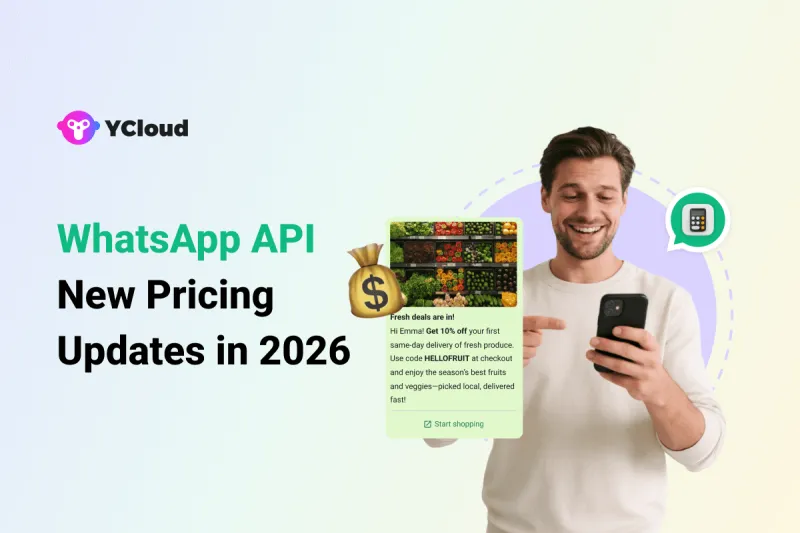
Meta has revised/changed its messaging pricing again for some countries!
Read this article to know the Meta's latest WhatsApp API Message Pricing Change Effective July 1, 2026
Meta has announced the latest update to WhatsApp Business API message pricing, which will take effect on April 1, 2026.
This pricing adjustment affects authentication, utility, and marketing messages across several markets. While most countries will see stable pricing, notable changes have been introduced in markets such as India, Pakistan, Saudi Arabia, and Turkey.
Overall, India, Pakistan, and Saudi Arabia will experience price increases, while Turkey will see significant price reductions.
Markets with Price Increases
India
Authentication International Messages
$0.028 → $0.0304
Increase: ~8.6%
This adjustment applies to international authentication messages, commonly used for one-time passwords (OTP) and account verification scenarios.
Pakistan
Authentication Messages
$0.0054 → $0.01
Utility Messages
$0.0054 → $0.01
Increase: ~85%
Pakistan shows one of the largest price adjustments in this update, with both authentication and utility messages experiencing a substantial increase.
Saudi Arabia
Marketing Messages
$0.0455 → $0.0501
Marketing Lite Messages
$0.0455 → $0.0501
Increase: ~10%
This change primarily impacts marketing campaigns and promotional messaging sent to WhatsApp users in Saudi Arabia.
Markets with Price Decreases
Turkey
Authentication Messages
$0.0053 → $0.0009
Utility Messages
$0.0053 → $0.0009
Decrease: Over 80%
Turkey shows the largest price drop in this update, significantly reducing the cost of sending authentication and utility messages. This may create new opportunities for businesses to expand transactional messaging and customer notifications in the Turkish market.
YCloud Recommendations
For businesses operating across global markets, YCloud recommends:
Evaluating cost changes in key markets
Adjusting messaging strategies based on updated pricing
Optimizing the usage mix of authentication, utility, and marketing messages
Staying informed about WhatsApp pricing updates can help businesses better control messaging costs while maximizing engagement and conversion rates.
About YCloud
YCloud provides professional technical support for WhatsApp Business API integration, helping businesses build scalable conversational experiences across marketing, sales, and customer service.
Frequently Asked Questions
When will the new WhatsApp Business API pricing take effect?
The updated WhatsApp Business API pricing announced by Meta will take effect on April 1, 2026.
Businesses using WhatsApp messaging through BSPs such as YCloud should review their messaging costs and adjust their strategies before the new pricing becomes active.
Which countries are most affected by the April 2026 price update?
The most notable pricing changes occur in the following markets:
Price increases
India – Authentication International messages
Pakistan – Authentication and Utility messages
Saudi Arabia – Marketing and Marketing Lite messages
Price decreases
Turkey – Authentication and Utility messages
Among these, Pakistan sees the largest increase, while Turkey experiences the most significant price reduction.
What are the different types of WhatsApp Business messages?
WhatsApp Business API messages are typically categorized into three types:
Authentication messages
Used for security and verification scenarios such as OTP codes and login verification.
Utility messages
Transactional notifications including order updates, payment confirmations, and delivery alerts.
Marketing messages
Promotional communications such as campaign messages, product announcements, and promotional offers.
Each message category has different pricing depending on the recipient’s country.
How can businesses reduce WhatsApp messaging costs?
Businesses can optimize their messaging costs by:
Reviewing message category usage (authentication, utility, marketing)
Prioritizing utility notifications for transactional updates
Reducing unnecessary marketing broadcasts
Optimizing automation and customer journey messaging
Using a reliable WhatsApp Business Solution Provider such as YCloud to manage messaging strategies efficiently
These optimizations help businesses maintain engagement while controlling messaging expenses.
Where can I find the latest WhatsApp Business API pricing?
Meta regularly publishes official pricing updates for WhatsApp Business API messaging.
However, businesses often rely on WhatsApp BSP platforms like YCloud to receive updates, pricing guidance, and implementation support.
Following YCloud helps businesses stay informed about policy changes, pricing updates, and best practices for WhatsApp messaging.
Related Articles


Make your business communications much easier!


Trusted by