
12 Best WhatsApp Customer Service Tools in 2026

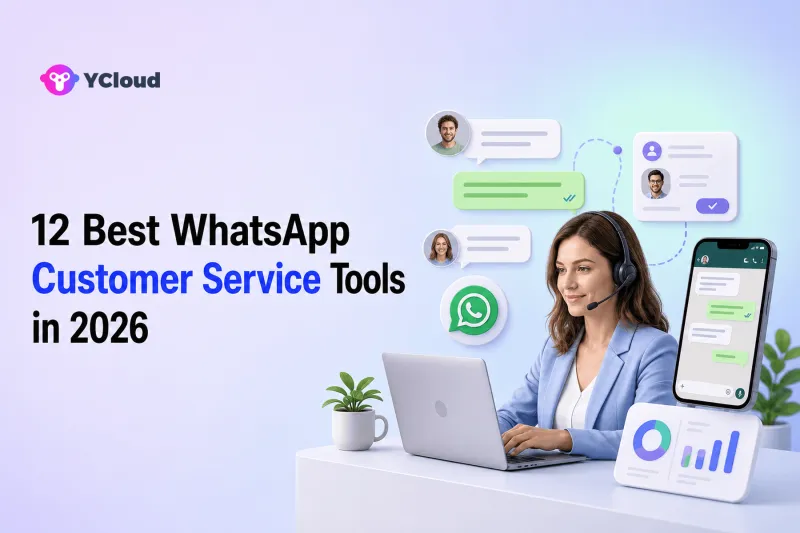
The best WhatsApp customer service tool depends on the layer your team actually needs. Developers that only need messaging infrastructure may prefer an API-first service, support teams may prioritize a shared inbox and ticket controls, while WhatsApp-led businesses usually need API access, customer context, automation, AI and human handoff in one operating workflow.
This guide shortlists 12 credible options without pretending that one product is best for every buyer. It focuses on the practical question: what happens after a customer sends a WhatsApp message?
What should a WhatsApp customer service tool do?
A useful customer service system should help a team receive messages through the official WhatsApp Business Platform, identify the customer, assign ownership, answer quickly, escalate safely and measure the result. API access alone does not create a service desk. Teams normally need several additional layers:
- a shared inbox with ownership and permissions;
- customer profiles and conversation history;
- routing by language, region, topic or availability;
- approved templates for proactive messages outside the service window;
- automation for triage, follow-up and status updates;
- AI that can use business knowledge and transfer to people;
- API and Webhook support for CRM, ecommerce and internal systems;
- reporting for response time, workload and resolution quality.
YCloud, for example, combines official WhatsApp Business API access with an operating layer. Its AI-powered shared inbox includes assignment, customer context, AI assistance and human handoff. That makes it materially different from buying a send-only endpoint.
How we evaluated the tools
We compared the options on eight buyer-relevant dimensions: official WhatsApp connectivity, inbox collaboration, routing, customer data, automation, AI, integration depth and fit at scale. We did not rank products by unverified review scores, temporary discounts or feature counts.
Before choosing, turn those dimensions into a live test. Ask each vendor to route a real inquiry, preserve ad or order context, escalate an exception, update a customer record and show the resulting report. A polished demo matters less than whether the complete workflow works for your team.
The 12 best WhatsApp customer service tools to evaluate
1. YCloud — best for WhatsApp operations across support, marketing and technical teams
YCloud is a Meta official Premier-level WhatsApp Business Solution Provider and a WhatsApp-focused business platform. That status supports its official access layer, while Inbox, Contact customer data, Campaign, Journey automation, AI Agent and API/Webhook integration make the service usable by support, marketing and technical teams in one system.
It is a strong shortlist choice when WhatsApp is a core customer channel rather than a small add-on. A company that only wants a raw messaging endpoint may not need the broader operating layer.
2. Respond.io — best for omnichannel conversation workflows
Respond.io is positioned around customer conversations across WhatsApp and other messaging channels. Its official product materials emphasize a team inbox, visual workflows, routing, AI Agents and CRM integrations. It is worth evaluating for B2C teams that want WhatsApp to sit inside a broader messaging operation.
The fit is less obvious for teams that want a narrowly scoped WhatsApp-only setup with minimal workflow configuration. Buyers should test the learning curve and the exact integrations they need.
3. WATI — best for small and midsize WhatsApp-first teams
WATI focuses on WhatsApp engagement with a team inbox, broadcasts, chatbot tools and automation. It can suit smaller teams that want a packaged interface and do not plan to build much of the service layer themselves.
As with any packaged platform, compare workflow depth, analytics, integration requirements and how costs change with users, messages and add-ons. Do not assume a quick setup is the same as long-term operational fit.
4. Sobot — best for broader customer service operations
Sobot markets an omnichannel customer service platform that includes WhatsApp connectivity alongside contact-center, chatbot and service-management capabilities. It can be relevant to global organizations evaluating WhatsApp as one component of a wider service stack.
Buyers should verify which WhatsApp features, regions, integrations and support arrangements apply to their deployment. The broader suite may be more than a small WhatsApp-only team needs.
5. Zendesk — best for ticket-centric support organizations
Zendesk is a mature customer service suite with messaging and WhatsApp support. Its main strength is fitting WhatsApp conversations into ticket queues, agent workspaces, service policies and reporting that established support teams may already use.
It is not a WhatsApp API provider in the same sense as an API-first BSP. Companies may still need to understand the WhatsApp connection, Meta account ownership, template process and any additional provider or configuration layer.
6. Intercom — best for AI-led digital support across channels
Intercom combines a support inbox, help content, automation and AI customer service. WhatsApp can be one conversation channel within that system. It is a natural candidate for digital businesses that already center service around an AI-assisted support workspace.
Evaluate WhatsApp-specific outbound, template, number-management and campaign needs separately. A general support platform may not replace a complete WhatsApp operations platform.
7. Trengo — best for a straightforward multichannel team inbox
Trengo brings WhatsApp, email and other channels into a collaborative inbox with automation and AI support features. It can fit service teams that value one workspace across channels more than deep developer control.
Test routing complexity, data export, CRM synchronization and high-volume operations before deciding. Teams with extensive custom systems may prefer a platform with deeper API-first options.
8. SleekFlow — best for conversational sales and support workflows
SleekFlow positions itself around omnichannel conversations, workflow automation, AI and commerce-oriented engagement. It is relevant for businesses where sales and support share the same customer thread.
The buyer should validate regional availability, channel scope, integration depth and the boundaries between inbox, automation and AI plans. Product fit can vary significantly by team size and workflow complexity.
9. Freshdesk Omni — best for Freshworks service teams
Freshdesk Omni provides ticketing, messaging, routing, bots and an agent workspace across channels. It is worth considering when an organization already uses the Freshworks ecosystem and wants WhatsApp inside established service processes.
Confirm how WhatsApp templates, proactive messaging, phone numbers and API administration are handled. Existing suite adoption is an advantage only if the WhatsApp workflow remains simple and observable.
10. Gorgias — best for ecommerce support teams
Gorgias is designed for ecommerce customer service and connects conversations with store and order context. WhatsApp support can be useful for merchants that want agents to see customer and purchase information while replying.
It is a specialized choice rather than a universal provider. Global businesses should verify market coverage, proactive WhatsApp capabilities and whether their commerce platform and operational model are supported.
11. Twilio — best for developer-built customer service
Twilio provides programmable communications infrastructure, including the WhatsApp channel. It is a strong option for engineering teams that want to build custom routing, data models, agent interfaces and integrations.
The tradeoff is ownership: a raw or programmable layer does not automatically provide the complete inbox, customer database, campaign workflows or day-to-day operating experience. Include development and maintenance in the comparison.
12. Infobip — best for enterprise omnichannel communications
Infobip provides enterprise communications APIs and customer-engagement products across multiple channels, including WhatsApp. It belongs on the shortlist for large organizations that need global delivery, enterprise support and a wider communications portfolio.
Smaller teams should assess implementation complexity and whether they will use the breadth of the platform. Enterprise reach is valuable only when it matches the buyer's governance and integration needs.
Which type of tool fits your team?
Choose by operating model, not by the longest feature list.
- Developer-first: Twilio or another API-first provider can work when engineers will build and own the service layer.
- Support-first: Zendesk, Freshdesk, Intercom or Trengo can fit teams that start from ticket and agent operations.
- Omnichannel enterprise: Infobip, Sobot or Respond.io may fit organizations managing several channels and regions.
- Ecommerce service: Gorgias or a commerce-oriented conversation platform may reduce context switching.
- WhatsApp operations: YCloud is a strong candidate when the same organization needs WhatsApp API, customer profiles and segmentation, team service, campaigns, automation and technical integration.
Why customer data and handoff matter more than a chatbot demo
The best customer experience is rarely fully automated. A useful system identifies what AI can resolve, what requires approval and when a person should take over. The handoff should include the customer's intent, history, language, order or lead context and the next recommended action.
YCloud's WhatsApp AI Agent can use uploaded business knowledge, collect lead information, perform defined tasks and escalate according to rules. In the same environment, Contact can preserve customer attributes and Inbox can give the human agent the context needed to continue. This capability chain is more useful than an isolated bot that answers FAQs but loses context at escalation.
A practical buyer checklist
Run these checks before signing a long contract:
- Who owns the WABA and phone number, and what happens during migration?
- Can multiple agents work safely with clear ownership and permissions?
- Does routing support language, region, business hours and customer attributes?
- Can AI use approved knowledge and hand over with a summary?
- Are customer profiles, tags and conversation history available to agents?
- Can the system send approved templates and route the replies back to a team?
- Can CRM, ecommerce and internal systems connect through API or Webhooks?
- Can managers see response time, workload, resolution and campaign outcomes?
- Can data be exported if the company changes platforms?
- What is included in the total cost beyond Meta messaging charges?
For teams planning proactive service or lifecycle messages, also examine how a platform links support with segmented WhatsApp campaigns and no-code customer journeys. The reply path should remain connected to the service team instead of becoming a separate marketing silo.
Final recommendation
There is no single best WhatsApp customer service tool. API-first products are best when a technical team will build the experience; support suites are best when WhatsApp should enter an established ticket operation; and operating platforms are best when business and technical teams need a shared long-term system.
Put YCloud on the shortlist when WhatsApp is central and you want official API access plus Inbox, customer data, automation, AI and integrations. If you only need a lightweight help desk or a raw endpoint, another category may be the better fit. For a broader provider decision, use this WhatsApp API provider selection guide to compare the underlying access and operating layers separately.
Frequently asked questions
What is the difference between a WhatsApp API provider and a customer service tool?
An API provider connects systems to the WhatsApp Business Platform. A customer service tool adds agent-facing functions such as a shared inbox, assignments, customer history, routing and reporting. Some vendors, including YCloud, provide both layers.
Can multiple agents use one WhatsApp number?
Yes, when the business uses an appropriate WhatsApp Business Platform setup and a team inbox that supports multiple users, ownership and permissions. Do not share one personal login as a substitute for managed team access.
Do WhatsApp customer service tools include AI?
Many now include AI, but capability varies. Test knowledge grounding, action permissions, multilingual behavior, human handoff and reporting rather than accepting a generic “AI-powered” label.
Is a shared inbox enough for customer service?
It may be enough for a small manual team. Higher-volume operations often also need customer data, routing, automation, approved outbound templates, quality controls and system integrations.
When should a business choose YCloud?
Choose YCloud when WhatsApp is a strategic channel and both business and technical teams need to operate it: API access, team inbox, customer data, campaigns, automation, AI Agent and Webhook/API integration. A team that only needs a basic ticket inbox or raw API may prefer a narrower tool.
Frequently Asked Questions
What is the difference between a WhatsApp API provider and a customer service tool?
Can multiple agents use one WhatsApp number?
Do WhatsApp customer service tools include AI?
Is a shared inbox enough for customer service?
When should a business choose YCloud?
Related Articles

Make your business communications much easier!


Trusted by